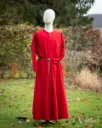
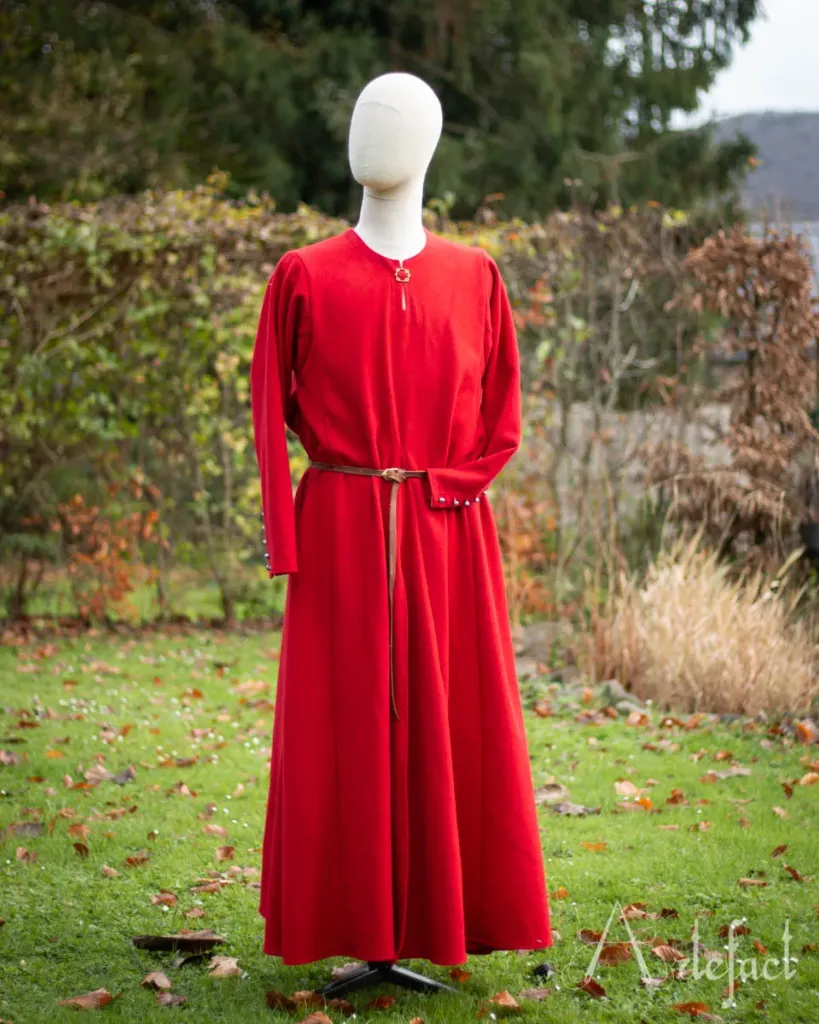
The tunic is a wool garment, sometimes lined, worn over the shirt.
In the 13th century, it reaches the knees for modest statuses; the richest may also wear it for practical reasons (hunting, riding, for example).
It has a full cut and is worn bloused at the belt.
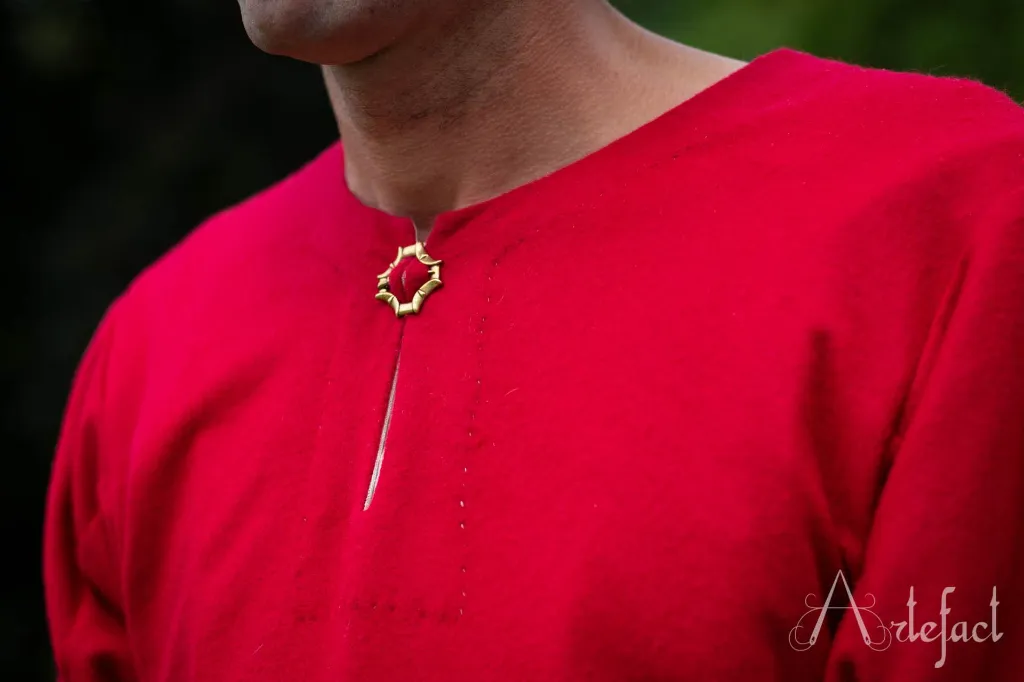
The neckline is fitted and can have several closure systems. The most common is the round neckline or the amigaut (central slit) fastened with a brooch.
The sleeves, full from the shoulder, are fitted on the forearm. Depending on status and period they can close with buttons, discreet lacing (hypothesis) or simply be fitted with no opening.
Historically, it is worn bloused at the belt, which will be partly hidden in the folds of the fabric.
The tunic for “rich” status has great fullness at the bottom, about 6 metres, and a length reaching the ankles.
Sources:
- Rutland Psalter
- Maciejowski Bible
Metal buttons available:
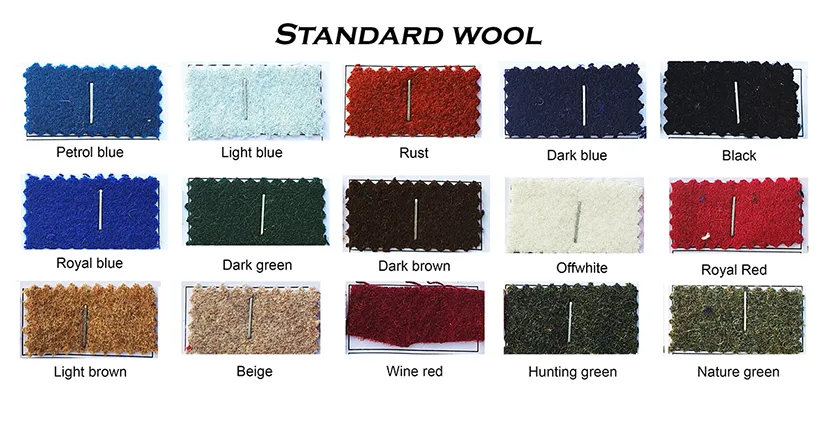
seeAfter your order, a confirmation email and a measurement sheet to fill in will be sent to you.