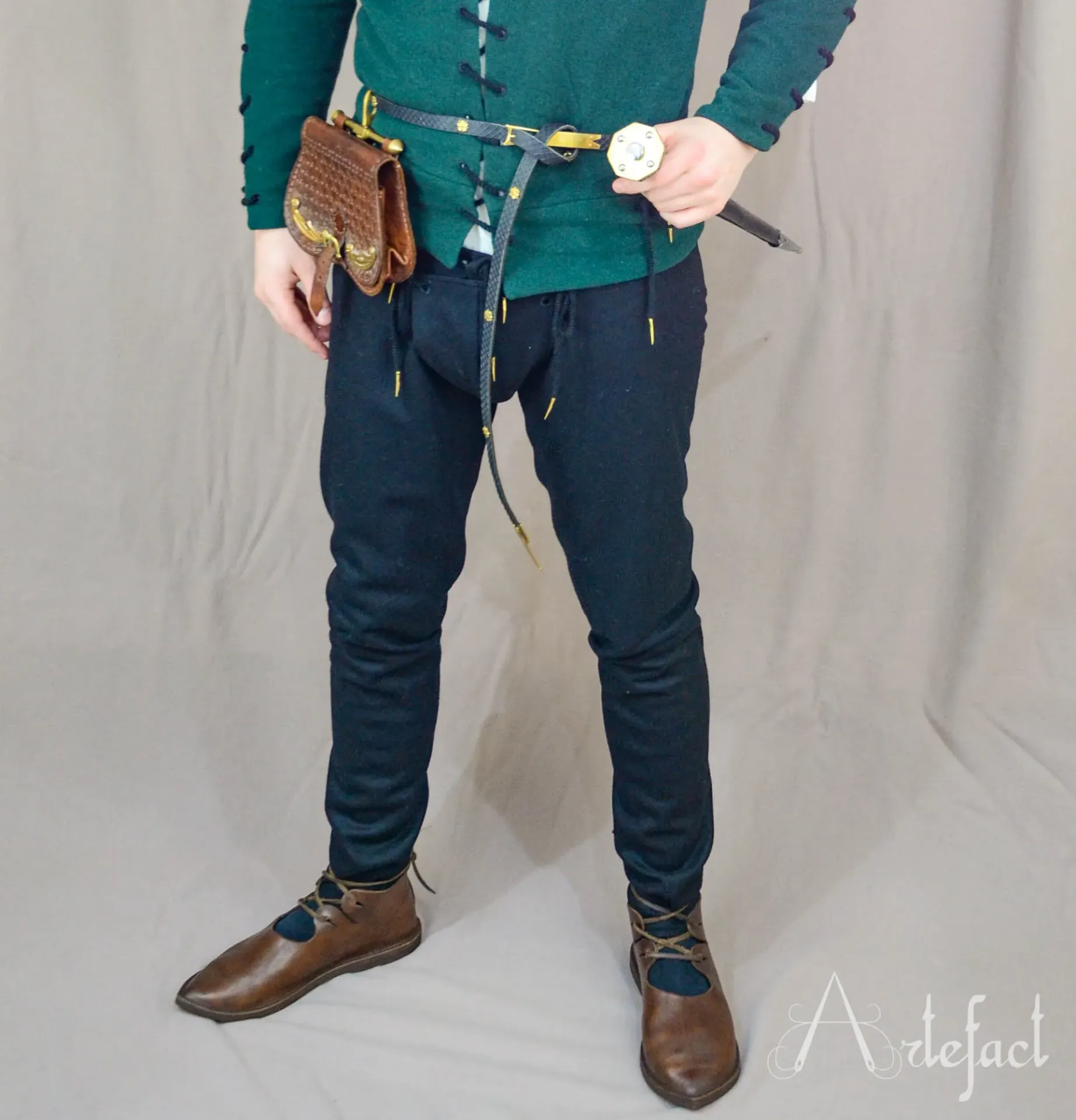
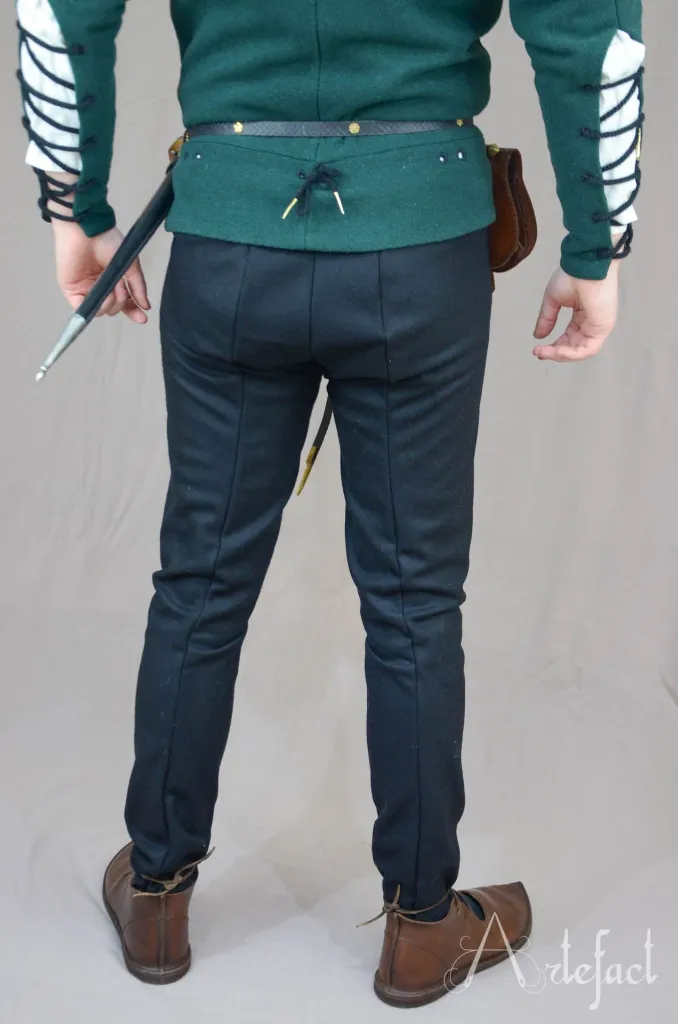
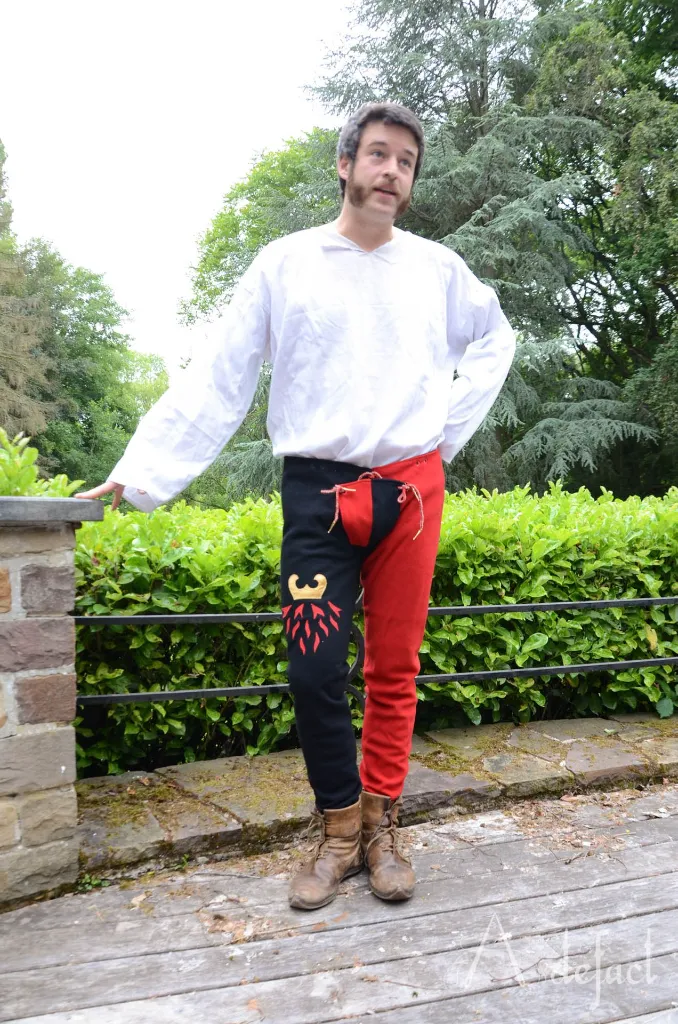
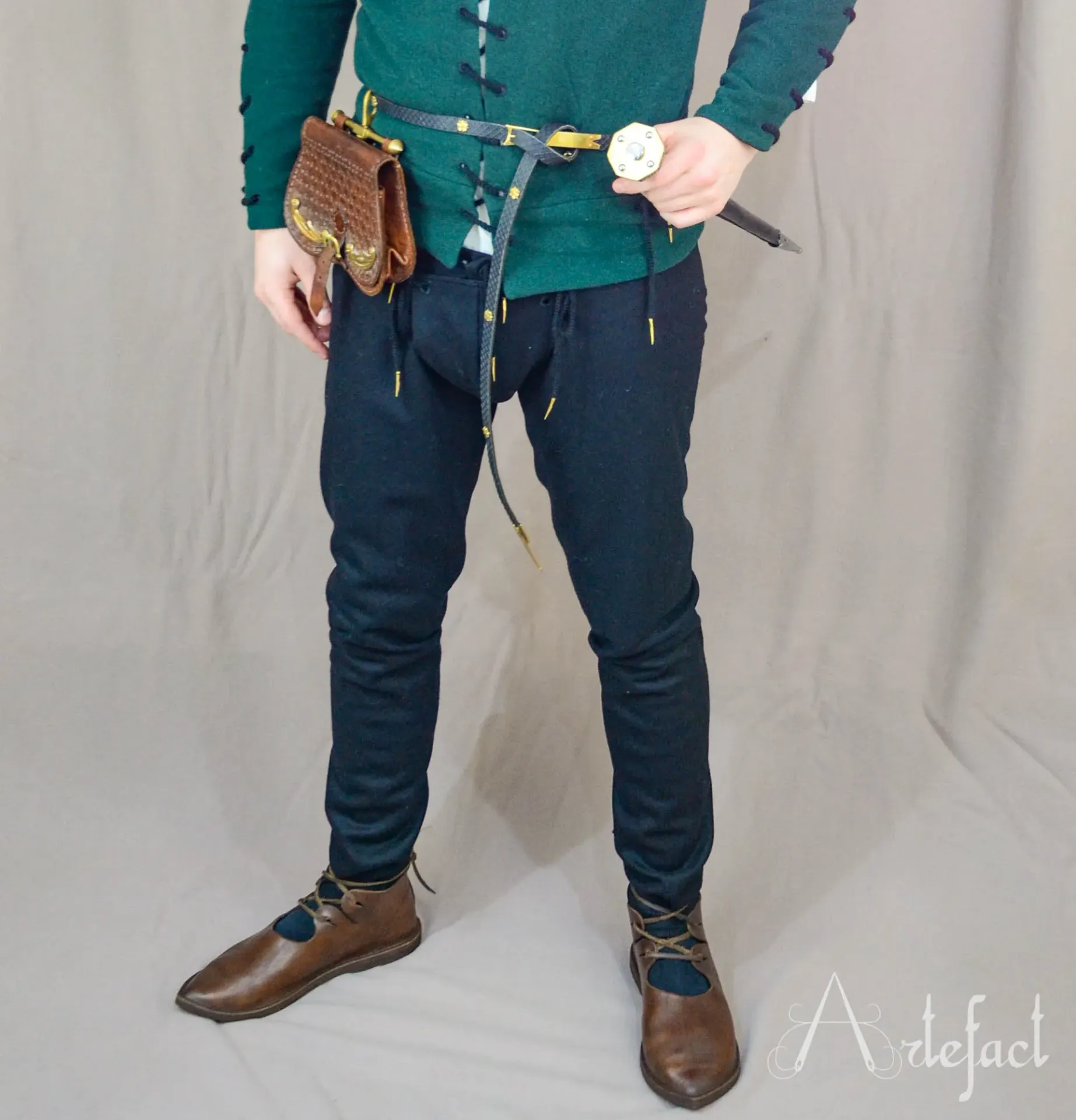
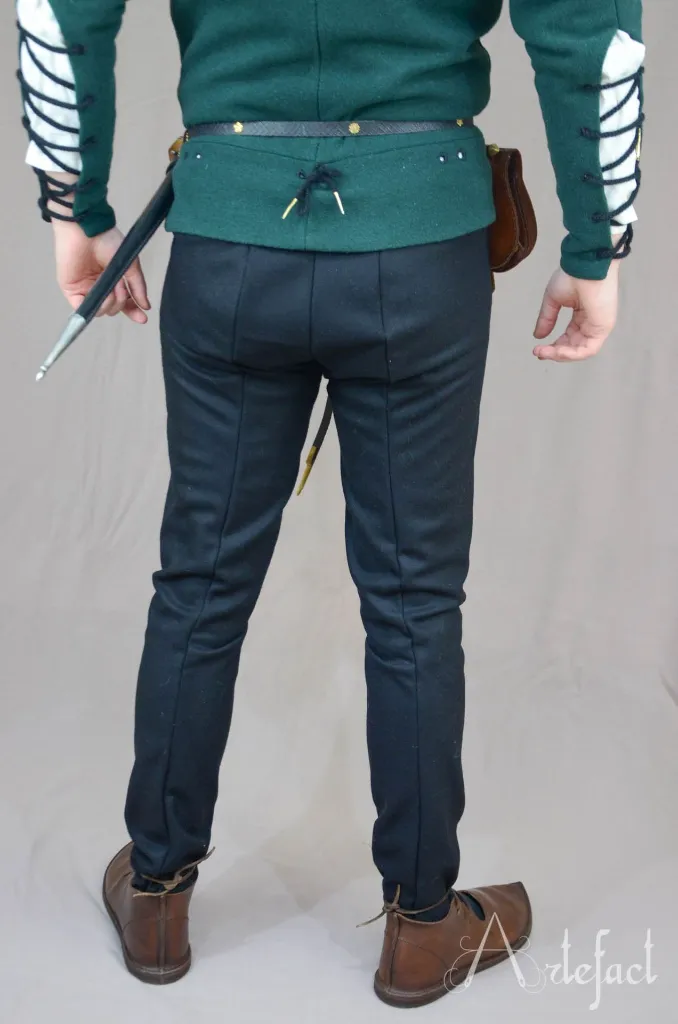
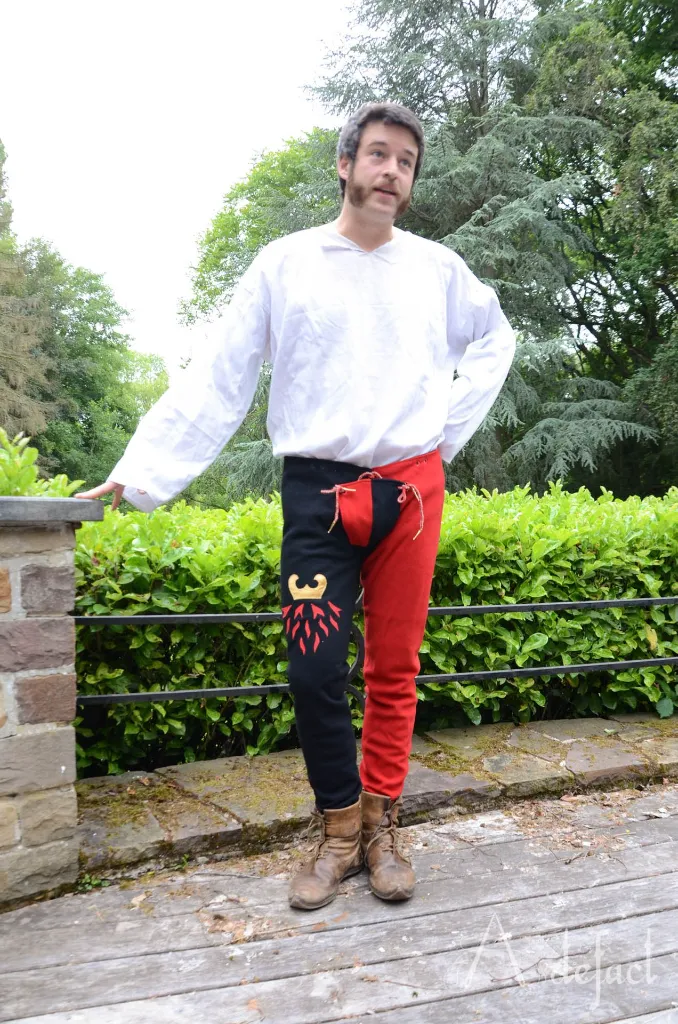
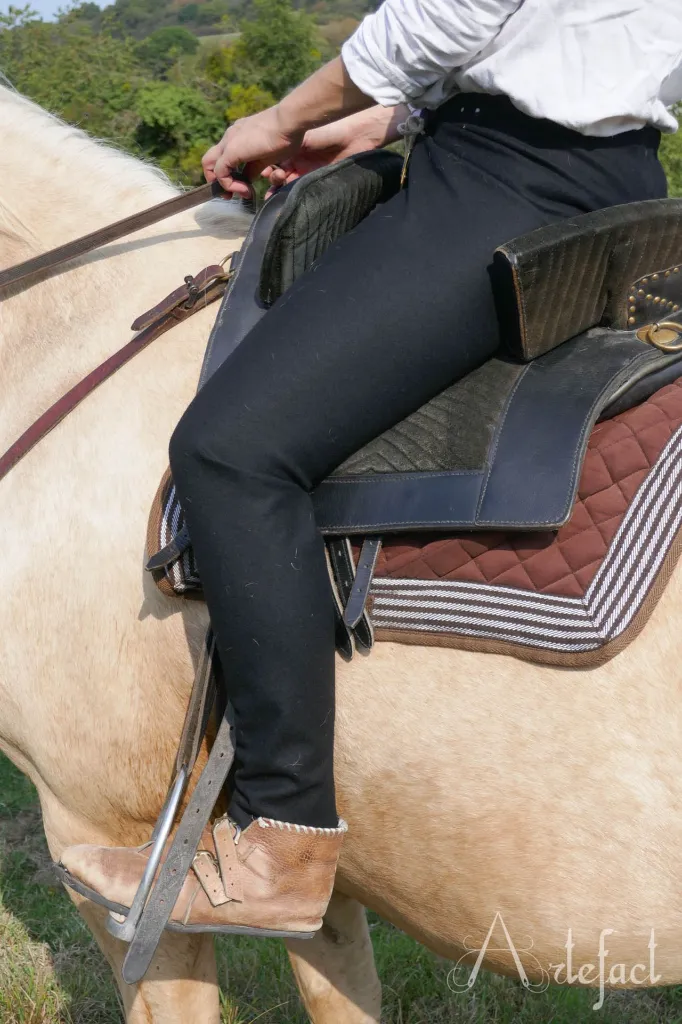
Drawbridge hose, appear in the 15th century, around 1405.
They are cut on the bias of the fabric to follow the shape of the legs as closely as possible.
They can have stirrups (a band of fabric passing under the foot) or full feet (like socks).
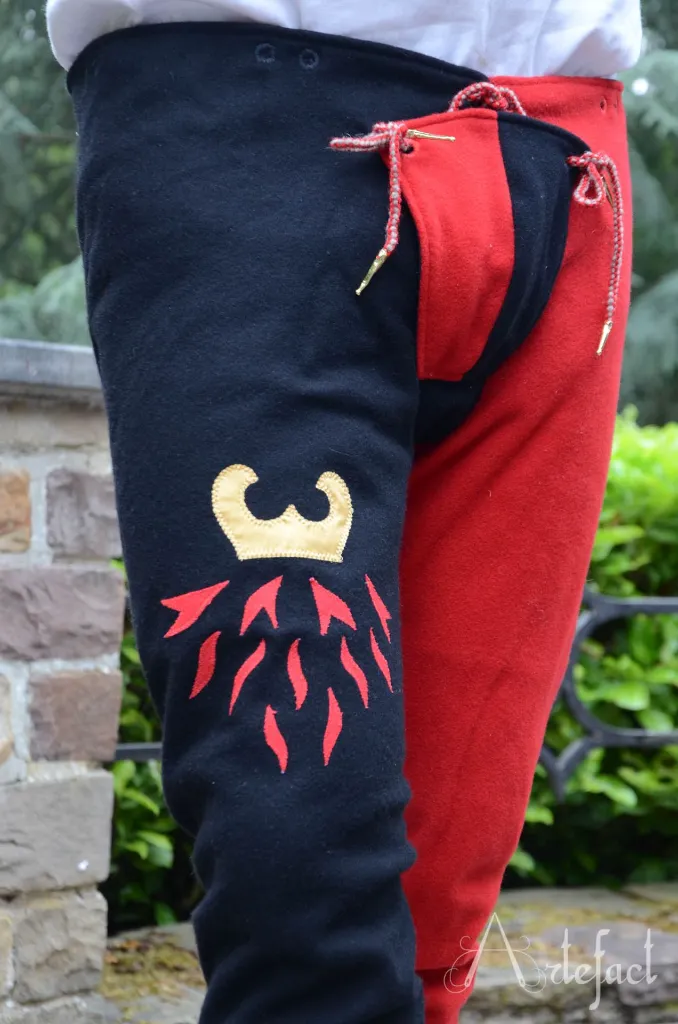
These hose have several pairs of eyelets along the waistband so they can be attached to the doublet. They can be two-coloured (although this is not common across the sources) and can be decorated with a symbol on one thigh for noble status.
Points not included, 8 needed in total: 5 around the waist, 3 to fasten the drawbridge and the hose. If you have a fuller figure (hip measurement larger than waist measurement), the hose can stay up with 3 points.
A linen lining is present down to mid-thigh.
Sources:
- Chronicles of Sire Jehan Froissart, Folio 328v
- The Justice of Emperor Otto (Royal Museums of Fine Arts of Belgium, Brussels)
Options :
- simple = hem at the bottom of the leg (budget version, but not the most historical)
- stirrup = band of wool passing under the foot, better-fitting hose, no uncomfortable seam under the foot (sourced)
-full foot = like a sock (sourced)
Current lead time:
seeAfter ordering, you will be sent a confirmation email and a measurement sheet to fill in.